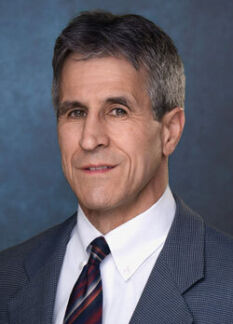
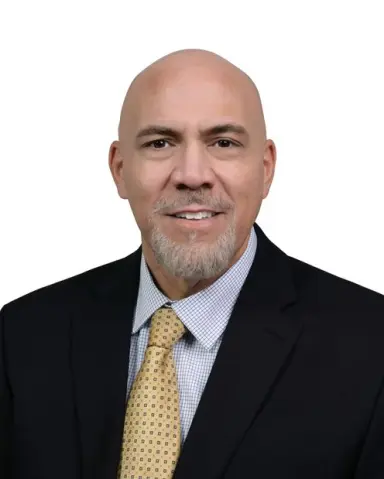
Stanley Hastings: The Serial TCPA Plaintiff Behind the “Marvin Taeese” False Identity
Stanley “Stan” Hastings Jr. is a well-documented serial TCPA plaintiff and repeat litigation participant whose courtroom conduct became the focal point of fraud allegations in federal proceedings. Unlike the vast majority of high-frequency TCPA plaintiffs, Hastings allegedly constructed the precise conditions required for viable legal claims by submitting fabricated information online, adopting a false identity, and posing as a prospective buyer of products he had no intention of purchasing.
At the heart of the controversy lies the fabricated persona known as “Marvin Taeese.” Based on court documents and defense-side allegations, Hastings reportedly used this invented identity to provoke incoming telemarketing calls and subsequently filed lawsuits against those companies that responded. Federal courts eventually allowed fraud counterclaims against Hastings to advance, representing one of the most consequential developments in the modern landscape of TCPA defense litigation.
Legal scholars, defense practitioners, and sitting federal judges all paid close attention. Courts acknowledged allegations establishing that Hastings provided false personal details, responded to calls under the fake alias, and deployed misleading information to cultivate litigation opportunities. Consequently, public and legal perception of Hastings underwent a dramatic transformation — from “victimized consumer” to what critics characterize as a calculated, engineered litigation operation.
Who Is Stanley Hastings Jr.?
Stanley “Stan” Hastings Jr. is a recurring TCPA plaintiff linked to numerous lawsuits brought in the Eastern District of Arkansas. His litigation activity generally revolves around telemarketing communications, lead acquisition systems, and alleged National Do Not Call Registry infractions.
Defendants appearing in multiple cases argued that Hastings deliberately engineered the very calls he later pursued in court. Court filings indicate that Hastings allegedly assumed the false identity “Marvin Taeese” when filling out lead-generation forms on the internet. He reportedly provided his actual mobile number but combined it with fabricated personal data and a business-linked mailing address traced to his father.
Attorneys for the defense contended that the entire scheme was conceived to generate incoming telemarketing calls that could subsequently be weaponized in TCPA litigation.
The “Marvin Taeese” Identity
Court documents characterize “Marvin Taeese” as the fabricated identity allegedly employed by Hastings to attract telemarketing outreach. Under allegations formally introduced in federal court, Hastings paired this fictional name with his authentic telephone number and a former business mailing address belonging to his father.
The alleged rationale behind the false identity was uncomplicated: engineer telemarketing interactions that could be converted into actionable TCPA claims at a later date. Defense teams maintained that Hastings deliberately concealed his true identity while simultaneously drawing companies into contact with him.
Courts subsequently evaluated whether those deliberate actions could be classified as fraudulent misrepresentations under applicable law.
How the Alleged Litigation Manufacturing Scheme Operated
According to court filings, Hastings allegedly followed a deliberate multi-step sequence intended to fabricate TCPA causes of action.
The alleged sequence reportedly commenced when online lead-generation forms were completed using the fabricated alias “Marvin Taeese.” Those submissions allegedly indicated consumer interest in insurance-related products and included consent to receive telemarketing outreach. Hastings reportedly entered his authentic mobile number while attaching false identifying particulars.
Once calls were received, Hastings allegedly responded as “Marvin” without correcting the identity confusion. Defense teams contended that he sustained conversations, conveyed enthusiasm for the products discussed, and allowed calls to conclude before subsequently filing TCPA lawsuits targeting the involved companies.
Court filings further alleged that Hastings never disclosed that his phone number was registered on the National Do Not Call Registry and never notified callers that he was ostensibly uninterested in the health insurance products under discussion.
One federal tribunal specifically acknowledged allegations that Hastings “answered to the name ‘Marvin’ without correcting the calling agent or advising them that he was not interested in receiving health insurance quotes.”
The Fraud Counterclaims That Reshaped TCPA Defense Strategy
Among the most consequential developments during the Hastings litigation was the decision by defendant companies to counterattack using fraud-based claims instead of relying exclusively on conventional TCPA defenses.
Hastings v. SmartMatch Insurance Agency, LLC
In Hastings v. SmartMatch Insurance Agency, LLC, defense counsel alleged that Hastings deliberately provided false consumer data to provoke telemarketing calls and manufacture litigation leverage.
Rather than merely contesting the TCPA claims, SmartMatch advanced the position that Hastings committed actionable fraud by employing a fabricated name, a deceptive mailing address, and invented consumer interest to initiate telemarketing activity.
According to the defense theory, businesses depended on that fraudulent information when purchasing leads and executing outbound call campaigns. Defense teams further argued that those alleged misrepresentations produced identifiable financial harm, including litigation costs, reputational damage, and exposure to additional TCPA liability.
SmartMatch’s Fraud Allegations
The fraud allegations advanced against Hastings concentrated on several specific factual claims.
Defendants alleged that Hastings employed the fabricated identity “Marvin Taeese” rather than his actual name. They also contended that he used a business mailing address connected to his father while falsely claiming to seek health insurance coverage that he allegedly had no genuine intention of obtaining.
The defense maintained that telemarketing businesses relied on that submitted data when acquiring leads and placing calls to the number provided. Under the fraud theory advanced by defense teams, those businesses sustained financial and legal damages after being entangled in TCPA litigation allegedly constructed on entirely false factual representations.
The March 2024 Federal Court Decision
In March of 2024, the federal court issued a ruling permitting the fraud counterclaim against Hastings to advance past the dismissal stage.
The court stated:
“After careful review of the allegations of the complaint, the Court concludes that Assure has alleged sufficient facts to state a claim for fraud.”
That ruling carried exceptional significance because courts had previously shown considerable reluctance to allow fraud counterclaims against TCPA plaintiffs to survive early-stage dismissal motions.
The court carefully evaluated the core elements of a fraud claim, including whether a false representation occurred, whether the party making the representation had knowledge of its falsity, whether intent to induce reliance was present, whether actual reliance by the companies occurred, and whether quantifiable damages resulted.
The court concluded that the alleged use of a fabricated name paired with a deceptive address could qualify as material misrepresentations sufficient to sustain a fraud claim under applicable legal standards.
The “Agent” Defense Argument
During the proceedings, Hastings reportedly floated the theory that an unnamed third-party “agent” may have submitted the online lead-generation forms on his behalf, rather than Hastings personally completing those submissions.
The court authorized discovery into that contention, opening investigative channels for defendants to probe whether Hastings personally completed the forms, whether unidentified third parties assisted him, and whether additional participants may have been involved in manufacturing the telemarketing contacts.
That discovery question became one of the most carefully tracked dimensions of the litigation because it raised broader concerns about organized litigation networks and coordinated lead-generation manipulation.
Hastings v. Callcore (2024)
A second major case implicating Hastings was Hastings v. Callcore.
In that proceeding, defendants again alleged that Hastings had utilized the fictitious “Marvin Taeese” identity while expressing fabricated interest in health insurance products and authorizing telemarketing outreach.
The court ruled that the fraud allegations were sufficiently developed to survive a motion to dismiss.
The court stated:
“The counterclaim alleges that Hastings made knowingly false statements of fact regarding his name and his interest in receiving insurance telemarketing calls for the purpose of inducing reliance on these statements.”
That decision further validated fraud-based defense theories against plaintiffs alleged to have deliberately manufactured TCPA claims.
Why the Hastings Cases Carry Such Significance
The Hastings litigation fundamentally altered the strategic landscape of TCPA defense practice.
Prior to the Hastings decisions, fraud counterclaims against TCPA plaintiffs were relatively scarce and regularly dismissed at the preliminary stages of litigation. In the aftermath of these rulings, defense firms began far more systematically investigating whether plaintiffs may have deployed misleading data or intentionally provoked telemarketing activity.
The cases additionally elevated discovery risks for recurring litigants. Defense teams began scrutinizing website submission records, lead acquisition histories, consent audit trails, call recordings, and communication logs with considerably greater intensity.
Perhaps most critically, the Hastings litigation transformed the prevailing narrative surrounding certain categories of TCPA lawsuits. Rather than reflexively treating all plaintiffs as innocent consumers burdened by unwanted calls, courts and defense attorneys began actively exploring whether some claims had been purposefully fabricated.
Current Litigation Status as of 2026
As of 2026, the Hastings litigation retains substantial influence within the TCPA defense community.
Hastings v. SmartMatch reportedly continues its progression toward later litigation phases following the fraud counterclaim’s survival past the dismissal stage. Meanwhile, Hastings v. Callcore similarly allowed fraud allegations to remain alive and active.
These judicial decisions continue to be invoked by defense practitioners arguing that businesses deserve the legal tools necessary to challenge allegedly manufactured telemarketing claims through affirmative fraud-based legal theories.
How Hastings Differs From Other Serial TCPA Plaintiffs
Stanley Hastings occupies a distinct category among serial TCPA plaintiffs because federal courts explicitly allowed fraud allegations tied directly to his litigation behavior to proceed.
Unlike plaintiffs criticized solely for aggressive filing patterns, Hastings confronted allegations involving the assumption of a fabricated identity, deceptive form submissions, invented product interest, and strategically concealed personal information.
Defense-side commentators frequently distinguish Hastings from other high-volume litigants because the “Marvin Taeese” fraud allegations created a considerably more direct and concrete fraud narrative than conventional standing disputes or consent argument.
Key Lessons for Businesses Facing TCPA Exposure
The Hastings decisions delivered several significant compliance and litigation lessons for companies confronted with TCPA claims.
Businesses have increasingly undertaken more thorough investigations into lead authenticity and the integrity of consent records. Companies are also exercising greater diligence in preserving website submission data, call recordings, IP logs, timestamps, and internal call-routing documentation.
The cases further established that companies may appropriately pursue counterclaims when available evidence suggests that a plaintiff deliberately supplied false information to manufacture telemarketing interactions.
Defense counsel now routinely cite the Hastings litigation as legal authority supporting discovery into allegedly manufactured claims and the viability of affirmative fraud counterclaims.
Frequently Asked Questions
Who is Stanley Hastings Jr.?
Stanley Hastings Jr. is a serial TCPA plaintiff accused of employing the fabricated alias “Marvin Taeese” to engineer incoming telemarketing calls and subsequently sue the companies that placed them.
What was the “Marvin Taeese” operation?
According to court records, Hastings allegedly submitted online lead-generation forms using fraudulent personal information, responded to resulting calls under the fake identity, conveyed interest in offered products, and then initiated TCPA lawsuits against the telemarketing companies he had drawn into contact.
Was Hastings subjected to fraud claims?
Yes. Defendant companies filed fraud counterclaims against Hastings, and federal courts allowed those claims to proceed past the dismissal stage.
Why does the Hastings litigation matter?
The cases established that fraud counterclaims against TCPA plaintiffs can survive dismissal motions when fabricated identities and deliberately deceptive information are alleged to have been involved.
What is the “agent” theory?
Hastings reportedly suggested that an unidentified third-party agent may have submitted lead-generation forms on his behalf. Courts permitted discovery into that claim.
Is Stanley Hastings connected to Paul Hastings LLP?
No. Paul Hastings LLP is a distinct international law firm that bears no relationship to Stanley Hastings Jr.
Final Thoughts: The TCPA Plaintiff Who Became the Defendant
Stanley “Stan” Hastings Jr. emerged as one of the most debated figures in TCPA litigation precisely because the conduct that allegedly produced his lawsuits subsequently became the evidentiary foundation for fraud allegations leveled directly against him.
According to defendant companies and court records, Hastings used the invented persona “Marvin Taeese,” submitted fraudulent identifying information, answered calls under that false name, and allegedly engineered the telemarketing interactions he later contested in federal court.
Federal rulings authorizing fraud counterclaims against Hastings represented a watershed moment in TCPA defense strategy. Companies increasingly treat the Hastings decisions as binding authority for investigating claims suspected of being manufactured and for aggressively countering plaintiffs accused of engaging in deceptive litigation conduct.
Whether future courts will continue broadening these fraud theories remains an open question. What is beyond dispute is that the “Marvin Taeese” litigation has permanently reshaped how companies throughout the country approach the defense of serial TCPA lawsuits.
Sources & References
Primary Sources – Stanley Hastings Litigation
https://tcpaworld.com/2024/03/06/counter-attack-alleged-litigator-that-supplied-fake-name-on-form-f/
Hastings v. SmartMatch Insurance Agency, LLC, Case No. 4:22-cv-00228 (E.D. Ark.)
Hastings v. Callcore, 2024 WL 943952 (E.D. Ark. March 5, 2024)
Secondary Sources and Legal Commentary
https://www.paulhastings.com/practice-areas
Case Citations
Hastings v. SmartMatch, 2022 WL 4002625 (E.D. Ark. Sept. 1, 2022)
Hastings v. Callcore, 2024 WL 943952 (E.D. Ark. March 5, 2024)
Tyson Foods, Inc. v. Davis, 347 Ark. 566, 66 S.W.3d 568 (2002)
Disclaimer
This article is based on publicly available court filings, judicial rulings, legal commentary, and media reporting. Allegations referenced in litigation remain subject to ongoing proceedings unless otherwise conclusively adjudicated. References to “serial litigator,” “professional plaintiff,” and related characterizations reflect commentary and claims discussed in cited legal sources and court records. This article is intended solely for informational and educational purposes and does not constitute legal advice.