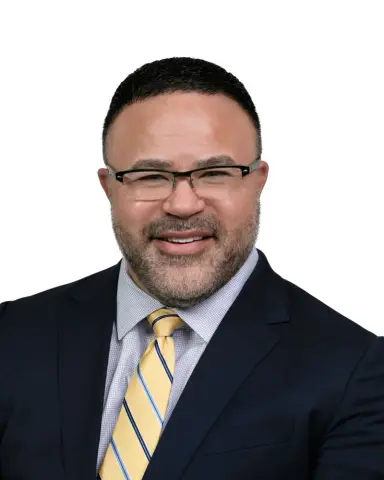
Todd C. Bank is a documented serial litigant, licensed attorney, and one of the most prolific professional plaintiffs associated with Telephone Consumer Protection Act litigation in the United States. Based in New York, Bank operates as a dual-role litigant who simultaneously functions as both counsel and pro se plaintiff in lawsuits involving robocalls, unsolicited text messages, telemarketing disputes, and class action settlement objections.
Court records, legal commentary, and judicial opinions do not portray Bank as a conventional consumer advocate or an ordinary victim of telemarketing abuse. Instead, they consistently characterise him as a serial filer whose litigation model depends on pursuing statutory damages tied to technical compliance violations. His lawsuits frequently target debt-relief companies, tax-service businesses, telemarketing vendors, media organisations, and lead-generation operations using similar or near-identical legal theories.
Defense firms, legal commentators, and federal courts have explicitly described Bank as a “serial litigant” and “repeat filer.” Because Bank is a licensed attorney, courts consistently hold him to a higher pleading standard than ordinary self-represented litigants, and judicial scrutiny of his filings has grown substantially over time. Grievance panels have also reportedly monitored aspects of his litigation conduct following allegations involving improper or specious claims.
Who Is Todd C. Bank?
Todd C. Bank is a New York attorney associated with a substantial volume of litigation involving unsolicited phone calls, text-message marketing, prerecorded voice messages, and telemarketing compliance disputes. Court records confirm that he frequently proceeds as a self-represented plaintiff while simultaneously attempting to serve as class counsel in the same action — an arrangement courts have repeatedly identified as a direct conflict of interest.
Public records identify Bank as a licensed New York attorney operating Todd C. Bank, Attorney at Law, P.C., based at 119-40 Union Turnpike, Fourth Floor, Kew Gardens, New York 11415, with more than a decade of litigation experience and a record of repeat TCPA filings subject to increasing judicial scrutiny.
His documented litigation activity includes:
- • Robocalls and telemarketing solicitations
• Automated Telephone Dialing System (ATDS) allegations
• National Do Not Call Registry claims
• Prerecorded message disputes
• Caller ID spoofing allegations
• New York General Business Law Section 349 claims
• New York General Business Law Section 399-p claims
• Class action objections and professional objector activity
• Simultaneously acting as plaintiff and class counsel
• Intervention in class-action settlements
Legal analysts have repeatedly observed that Bank’s activities extend beyond ordinary consumer complaints and resemble a structured serial filing enterprise built around statutory damages and procedural leverage.
The Dual-Role Conflict: Plaintiff and Lawyer Simultaneously
One of the most contentious aspects of Bank’s litigation history is his repeated attempt to serve as both the named plaintiff and class counsel in the same lawsuit. Federal courts have consistently identified this arrangement as a direct ethical and procedural conflict because a class attorney is expected to protect the interests of all absent class members, whereas a named plaintiff may hold personal financial motivations that conflict with those obligations.
Courts noted that Bank’s role as attorney created incentives tied to attorney fees and litigation control, while his role as plaintiff involved pursuing personal recovery. Judicial opinions repeatedly questioned whether one individual could fairly and adequately fulfil both functions simultaneously. One court stated explicitly that a single person cannot act as both the primary plaintiff and the attorney representing the class in the same litigation.
The practical consequences were significant: courts restricted Bank’s ability to represent classes, several lawsuits encountered procedural barriers because of the conflict issue, class allegations tied to his dual-role structure were dismissed or rejected, and Bank was often forced to proceed individually or obtain separate counsel.
The Serial Filing Model
Bank operates as a high-volume professional plaintiff with a repeatable litigation strategy developed over many years of TCPA litigation. His lawsuits commonly involve filing class-action complaints using standardised pleading structures, naming multiple related corporate defendants including lead generators and affiliates, alleging spoofed caller IDs and prerecorded voice messages, combining federal TCPA claims with New York state-law provisions, seeking statutory damages for every alleged call or message, filing objections in unrelated class-action settlements, and pursuing Supreme Court review in certain matters.
Bank frequently invokes both federal TCPA provisions and New York consumer-protection statutes including General Business Law Sections 349 and 399-p, substantially increasing potential statutory exposure for defendants. Critics argue this structure is designed primarily to maximise settlement pressure rather than to address genuine consumer harm.
A recurring weakness in Bank’s approach, however, is that courts increasingly hold him to a much higher pleading standard because he is an experienced attorney. Several rulings specifically state that Bank “knew or should have known” the federal pleading requirements given his extensive TCPA litigation background.
Notable TCPA Cases Involving Todd C. Bank
Bank v. CreditGuard of America, Inc. (2018)
Filed in the Eastern District of New York under case number 1:18-cv-01311-PKC-RLM, this case involved allegations concerning prerecorded debt-relief robocalls, spoofed caller IDs, and violations of both the federal TCPA and New York General Business Law Section 399-p. According to the complaint, Bank received a prerecorded call on January 10, 2018 from spoofed number 248-710-0050, pressed “1” to reach a live operator, and gave the false name “Thomas LaRasche” during the interaction. The complaint alleged that the equipment used was capable of storing numbers and delivering prerecorded messages, and that the message failed to disclose legally required identifying information. The lawsuit sought $500 per TCPA violation, up to $1,500 for wilful violations, additional New York damages, injunctive relief, and attorney fees. Defense commentators later cited the matter as a textbook example of serial TCPA litigation combining multiple defendants, layered statutory theories, and technical compliance allegations.
Bank v. ICOT Holdings, LLC (2023)
Filed in the Eastern District of New York, this litigation focused heavily on standing requirements and pleading sufficiency. The court closely examined whether Bank had adequately connected the alleged telemarketing activity to the defendant, citing lack of factual specificity, weak allegations connecting defendants to the calls, reliance on assumptions rather than documented evidence, and failure to sufficiently establish defendant involvement. The ruling reflected a broader judicial trend toward requiring more detailed factual allegations from serial TCPA plaintiffs.
Bank v. Alleviate Tax, LLC (2024) — The “Czar” Case
This case became one of Bank’s most damaging litigation defeats. The lawsuit was dismissed with prejudice at the pleadings stage, permanently barring Bank from refiling the same claims. According to the court’s findings, Bank failed to adequately connect Alleviate Tax to the calls at issue, failed to establish a sufficient relationship between the callers and the defendant, failed to adequately allege residential-line use required for certain Do Not Call Registry claims, and produced pleadings lacking sufficient factual detail.
Most significantly, the court emphasised that Bank was not entitled to the procedural leniency typically extended to inexperienced pro se litigants because he is a licensed attorney with extensive TCPA experience. The court specifically noted that Bank “knew or should have known the pleading requirements.” Defense-side commentators described the ruling as a major victory against serial TCPA litigation. The successful defense was led by Troutman Amin LLP and attorney Eric J. Troutman, widely known within the industry as the “Czar of TCPA.” The outcome reinforced a growing judicial trend: experienced attorney-plaintiffs are increasingly subject to heightened pleading standards in federal TCPA litigation.
Professional Objector Activity
Bank is also widely associated with professional objector activity in class-action litigation. Professional objectors repeatedly challenge class-action settlements, attorney-fee structures, and settlement procedures. Critics argue that some professional objectors use these procedural tools primarily to create leverage, delay settlements, or negotiate separate payments. Bank has repeatedly appeared in litigation involving challenges to class-action settlements, objections to attorney-fee requests, procedural objections to settlement notices, challenges to settlement distributions, and intervention in unrelated class actions. This activity expanded his litigation footprint well beyond ordinary TCPA cases and reinforced his reputation as a professional serial litigator.
Courts Imposing Heightened Standards
A recurring theme in Bank’s litigation history is growing judicial frustration with repetitive filings and insufficient pleadings. Because Bank is a licensed attorney with substantial TCPA experience, courts repeatedly emphasise that he is expected to understand federal pleading standards, litigation procedures, and evidentiary requirements, and that he is not entitled to the leniency often afforded to inexperienced pro se litigants. This heightened scrutiny has created increasing procedural challenges for his serial filing strategy and contributed to multiple dismissals and adverse rulings.
Public Profile and Legal Commentary
There is little serious disagreement within the TCPA defense industry regarding Bank’s status as a professional plaintiff and serial litigator. Evidence cited by critics includes numerous TCPA lawsuits across multiple jurisdictions, repeated judicial descriptions labelling him a repeat filer, conflict-of-interest rulings involving class representation, professional objector activity, dismissals tied to pleading deficiencies, and courts holding him to heightened standards as an attorney. Defense organisations and legal commentators routinely cite Bank as one of the clearest examples of industrial-scale TCPA litigation driven by statutory damages and procedural leverage.
The Broader Debate Over Serial TCPA Litigation
The TCPA was originally enacted to protect consumers from abusive telemarketing practices. Critics argue that serial litigators have transformed it into a large-scale statutory damages industry. Potential exposure in TCPA litigation includes $500 per violation, up to $1,500 for alleged wilful conduct, additional New York statutory penalties, class-action exposure, and attorney-fee awards. Bank’s strategy focuses on aggregating these penalties across multiple claims, defendants, and legal theories to maximise settlement leverage and litigation pressure.
Frequently Asked Questions
Is Todd C. Bank a serial litigator?
Yes. Court records, legal commentary, and judicial rulings consistently identify Bank as a repeat TCPA plaintiff and professional litigator.
Is Todd C. Bank a licensed attorney?
Yes. Todd C. Bank is a licensed New York attorney operating Todd C. Bank, Attorney at Law, P.C.
Why do courts criticise Bank’s lawsuits?
Courts have cited conflict-of-interest issues arising from his dual role as plaintiff and class counsel, insufficient pleadings, repetitive filing patterns, and heightened expectations tied to his status as an experienced attorney.
What is a professional objector?
A professional objector is an individual who repeatedly challenges class-action settlements and attorney-fee structures, often creating procedural delays or disputes.
What types of companies does Bank sue?
Debt-relief companies, telemarketing firms, financial-service providers, media organisations, marketing businesses, and related entities.
Why was Bank v. Alleviate Tax important?
The court dismissed the case with prejudice and held that Bank, as an experienced attorney, should already understand federal pleading standards — removing any claim to pro se leniency.
Does Bank continue filing TCPA lawsuits?
Public court records and legal commentary indicate continued litigation activity involving consumer-protection statutes and telemarketing disputes.
Final Thoughts
Todd C. Bank is not regarded by critics as a conventional consumer advocate or an ordinary victim of telemarketing abuse. Instead, he has become one of the most recognisable professional plaintiffs in modern TCPA litigation: an attorney who combined serial filings, class-action objections, statutory-damage theories, and procedural leverage into a large-scale litigation enterprise.
His cases illustrate broader concerns about TCPA enforcement, including technical compliance disputes converted into settlement pressure, repetitive lawsuits targeting multiple industries, plaintiff-and-counsel conflicts of interest, professional objector activity, expanding procedural abuse concerns, and industrial-scale statutory-damages litigation. As scrutiny of professional-plaintiff litigation continues to intensify, Bank’s cases remain central to debates about TCPA reform, class-action ethics, and the future of consumer-protection litigation.
Sources & References
Primary Sources
https://caselaw.findlaw.com/court/us-dis-crt-ed-new-yor/115670811.html
https://natlawreview.com/article/long-story-todd-bank-threatens-to-sue-me-blog-post-and-he-actually-has-point
https://clrkc.com/court-rules-serial-plaintiff-cannot-act-both-as-plaintiff-and-class-counsel/
https://caselaw.findlaw.com/court/ny-supreme-court/2174130.html
https://law.justia.com/cases/federal/district-courts/new-york/nyedce/1:2018cv01311/414214/
Secondary Sources
https://www.supremecourt.gov/
https://www.courtlistener.com/
https://www.plainsite.org/
Disclaimer
This article draws on publicly available court records, judicial opinions, legal commentary, and published media reports. References characterising Todd C. Bank as a serial litigator or professional plaintiff reflect documented litigation activity and publicly available legal materials. Public-record information may not always be complete or fully accurate and should not be used for employment screening, tenant screening, credit determinations, or any purpose governed by the Fair Credit Reporting Act. The content is provided solely for informational and educational purposes and does not constitute legal advice.