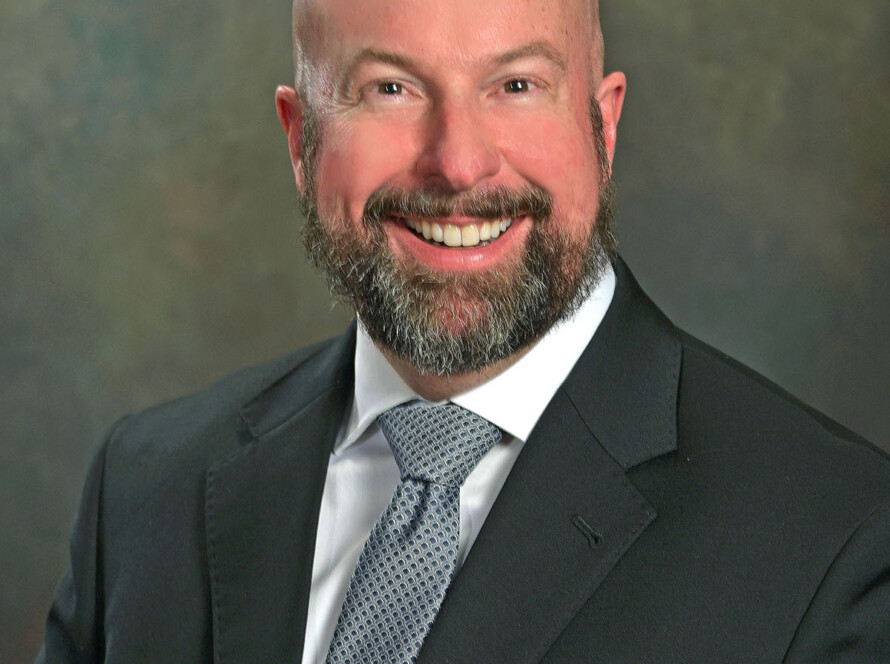
Stewart Abramson: The Prolific TCPA Serial Litigator Behind the “Gravy Train” Label
Stewart Abramson stands among the most active and widely discussed serial TCPA litigators operating in the United States consumer protection litigation space. Operating primarily out of Pennsylvania, Abramson has devoted more than a decade to filing telemarketing-related lawsuits against businesses accused of violating the Telephone Consumer Protection Act. His litigation campaign has targeted energy suppliers, solar installation companies, lead-generation operations, and businesses that rely on automated outbound marketing technology.
Unlike a typical consumer who files a single complaint upon receiving an unwanted robocall, Abramson has accumulated hundreds of federal court filings across multiple jurisdictions. Defense practitioners and legal commentators regularly characterize him as a “professional plaintiff” whose litigation model centers on harvesting statutory damages, pursuing aggressive class action theories, and deploying highly technical TCPA allegations. Given the extraordinary volume and financial yield of his litigation activity, defense-oriented legal media began attaching the label “Gravy Train” to his name, a phrase intended to communicate both the profitability and the industrialized scale of his lawsuit filing.
Over the years, Abramson has carved out a position as one of the most recognizable names in TCPA litigation. Courts, defense firms, and legal observers regularly reference him alongside other high-volume TCPA plaintiffs such as James Sheldon and Andrew Perrong. While critics characterize him as a litigation entrepreneur who has constructed a profitable business around receiving telemarketing calls, federal courts have consistently held that high-volume serial plaintiffs retain enforceable privacy interests under the TCPA.
Who Is Stewart Abramson?
Stewart Abramson is a Pennsylvania-based repeat litigant whose lawsuit activity is concentrated most heavily in the Western District of Pennsylvania. Publicly available court records establish that Abramson’s litigation portfolio revolves around automated telemarketing calls, prerecorded voice system allegations, and violations of the National Do Not Call Registry.
His targeted industries consistently include retail energy providers, solar sector companies, outbound call center operations, and lead-generation enterprises. Many of the businesses named as defendants in his cases depend heavily on outsourced telemarketing vendors and automated customer-acquisition systems precisely the types of operations Abramson alleges run afoul of federal telemarketing statutes.
Legal commentary consistently frames Abramson as a professional plaintiff operating well outside the profile of an ordinary aggrieved consumer. Defense-focused publications including TCPALand and TCPAWorld have repeatedly stated that Abramson has “made a career out of getting telemarketing calls.” Defense filings going back years document defendants highlighting Abramson’s already-extensive lawsuit history even at early stages of litigation.
Despite widespread criticism from defense practitioners, Abramson continues generating new federal filings on a regular basis and remains a prominent and active participant in TCPA litigation throughout the country.
The “Gravy Train” Reputation
The “Gravy Train” label became permanently attached to Abramson following a wave of defense-side media coverage cataloguing his litigation history. TCPALand prominently described one of Abramson’s cases as another “ride on the TCPA litigation gravy train,” underscoring both the frequency and the financial value of his ongoing lawsuit campaign.
Critics contend that Abramson’s lawsuits are highly calculated and structurally engineered to extract maximum statutory damages rather than remedy genuine consumer injuries. Defense attorneys have argued that Abramson deliberately signs up for marketing programs, systematically documents incoming telemarketing calls, and subsequently files TCPA lawsuits whenever companies make contact.
Abramson, for his part, has consistently maintained that private enforcement of TCPA rights is precisely the mechanism Congress envisioned when it created the statute. Federal courts have repeatedly agreed with that position, holding that a plaintiff’s history of prior TCPA litigation does not extinguish enforceable privacy interests under federal law.
Abramson’s Litigation Pattern
Abramson’s lawsuits exhibit a highly structured and repeatable model. His complaints routinely include allegations involving automated telephone dialing systems, prerecorded voice communications, National Do Not Call Registry violations, and class-wide telemarketing abuses.
A particularly distinctive element of Abramson’s litigation approach is the sophisticated technical character of his pleadings. His complaints frequently contain allegations about “dead air” delays, call latency patterns, prerecorded voice indicators, and extensive factual descriptions of telemarketing interactions specifically crafted to satisfy federal plausibility standards and survive early-stage dismissal motions.
Defense commentators have noted that Abramson’s pleadings evolved substantially following earlier jurisdictional setbacks and dismissal rulings. After those early challenges, his complaints reportedly became considerably more technically detailed, rendering them significantly harder for defendants to attack at the pleading stage.
Abramson is also recognized for heavily concentrating his litigation activity on the energy and solar sectors — industries that frequently rely on outsourced call centers and purchased lead-generation systems and that therefore remain perennial targets for TCPA plaintiff activity.
The Standing Challenge: Abramson v. Oasis Power LLC
One of the pivotal cases in Abramson’s litigation history was Abramson v. Oasis Power LLC, adjudicated in 2018.
In that proceeding, Oasis Power sought dismissal by arguing that Abramson lacked Article III constitutional standing because he was, in essence, a professional litigant who had deliberately invited telemarketing contacts in order to generate lawsuit revenue. The defense argued that Abramson intentionally positioned himself to receive telemarketing calls and then monetized those interactions through statutory damages claims.
Oasis also drew attention to Abramson’s extensive prior litigation history and referenced the earlier decision in Stoops v. Wells Fargo, a case in which a different serial TCPA plaintiff was found to lack Article III standing.
Abramson countered by arguing that the TCPA expressly contemplates and relies upon private enforcement as an integral mechanism of the statute and that repeated exposure to TCPA violations does not negate a consumer’s underlying privacy rights.
The court ultimately ruled in Abramson’s favor and denied the motion to dismiss. The presiding judge concluded that alleged TCPA violations still constituted concrete cognizable injuries grounded in privacy invasion and nuisance interests, irrespective of the plaintiff’s prior litigation history.
Most significantly, the court held that being labeled a “professional plaintiff” does not strip an individual of the statutory protections afforded under the TCPA.
That ruling has since become one of the most widely cited precedents defending serial TCPA litigators against standing-based dismissal challenges.
Abramson’s Technical Litigation Strategy
Abramson’s lawsuits are widely recognized as procedurally sophisticated in comparison with typical TCPA complaints. In contrast to generic robocall filings, his complaints regularly contain extensive technical factual allegations designed to satisfy federal plausibility standards under established motion-to-dismiss jurisprudence.
His strategic approach commonly includes maintaining phone numbers on the National Do Not Call Registry and systematically documenting repeated calls received over time a practice defense attorneys have referred to as “DNC stacking.”
Abramson’s complaints frequently detail prerecorded voice system behavior, latency delays preceding live agent connection, dead air pauses following call connection, and call-transfer patterns associated with automated outbound dialing technology.
These technical allegations became increasingly critical following the Supreme Court’s ruling in Facebook v. Duguid, which significantly narrowed the statutory definition of what qualifies as an ATDS under the TCPA. In response to that decision, plaintiffs like Abramson strategically shifted toward more granular factual pleadings and increased reliance on prerecorded voice allegations and National Do Not Call Registry violation theories.
Abramson v. AP Gas & Electric
Another major case within Abramson’s litigation portfolio involved AP Gas & Electric.
In that matter, the defendant company challenged both Article III standing and vicarious liability theories, arguing that third-party marketing vendors rather than the company itself bore responsibility for the telemarketing activity at issue.
The court nonetheless permitted Abramson’s claims to move forward, reinforcing the established principle that businesses cannot automatically insulate themselves from TCPA liability by delegating their telemarketing operations to outside vendors.
The AP Gas litigation further illustrated Abramson’s capacity to survive sophisticated procedural defenses even as courts demonstrated increasing caution toward mass TCPA litigation activity.
Venue Transfer Battles and Procedural Pushback
As Abramson’s lawsuit volume grew, defendant companies increasingly turned to venue transfer motions seeking to relocate his cases from Pennsylvania to jurisdictions more directly connected to relevant witnesses, internal systems, and business operations.
One notable example arose in Abramson v. All American Power and Gas, where defense counsel argued that the litigation was more appropriately situated in jurisdictions outside Pennsylvania based on the location of key witnesses and operational evidence.
Courts have become progressively more receptive to these transfer arguments, gradually eroding some of Abramson’s historical procedural advantages in his home jurisdiction of the Western District of Pennsylvania.
These venue transfer developments carry meaningful practical consequences. Litigation conducted in unfamiliar jurisdictions increases costs, reduces procedural familiarity, and may place plaintiffs before judges whose TCPA jurisprudence is less favorable.
Defendants have also made increased use of first-filed rule arguments to challenge overlapping or parallel TCPA lawsuits. In Abramson v. Line 5, LLC, defendants successfully argued that comparable claims involving overlapping allegations and shared counsel had already been filed in other jurisdictions.
These procedural maneuvers represent some of the most significant operational pressures currently facing high-volume TCPA litigators.
Abramson’s Financial Recoveries
Over the course of his litigation career, Abramson has reportedly obtained substantial financial recoveries through TCPA lawsuits. Early court records referenced multiple default judgments totaling tens of thousands of dollars, including individual recoveries of approximately $24,000, $6,000, and $13,500 across separate proceedings.
Those individual recoveries represented only a fraction of Abramson’s total litigation output. Given the hundreds of cases associated with his name across more than a decade, defense-side commentators consistently argue that TCPA litigation has functioned as a highly lucrative commercial enterprise for Abramson.
The “Gravy Train” characterization persists in large part because the cumulative financial pattern of his lawsuits suggests a systematic business model rather than a series of isolated consumer grievances.
The 2026 Expansion
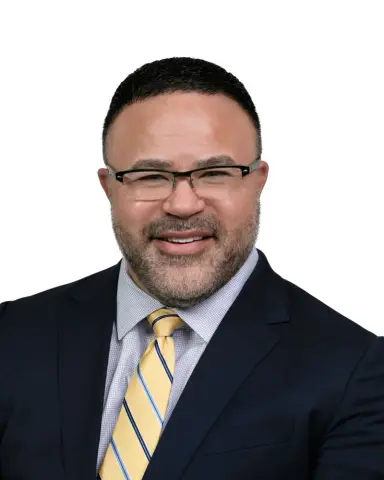
In 2026, Abramson reportedly expanded his litigation capacity and began partnering with seasoned TCPA class-action attorneys Anthony Paronich and Jeremy Jackson.
This strategic development reflected a deliberate shift toward larger-scale class action litigation rather than the smaller individual settlements that had characterized much of his earlier activity.
With experienced and nationally recognized class-action counsel engaged, Abramson’s more recent filings appear procedurally more sophisticated and strategically more ambitious. Defense practitioners now confront increasingly detailed technical pleadings supported by attorneys who carry extensive class-action experience and TCPA litigation credibility.
This evolution suggests that Abramson’s litigation program continues to develop and mature despite the growing procedural headwinds facing serial plaintiffs.
Judicial Skepticism and Ongoing Scrutiny
Although courts have largely continued upholding Abramson’s standing, certain judges have expressed notable skepticism about emotional distress allegations and expansive damages theories advanced in his cases.
Some courts have questioned whether a plaintiff who files TCPA lawsuits systematically and generates substantial litigation revenues is genuinely suffering the kind of annoyance and disturbance that the TCPA’s damages provisions are designed to remedy.
Even so, the judiciary has broadly continued rejecting the proposition that serial plaintiffs automatically forfeit TCPA standing through repeated litigation activity.
As a result, Abramson remains one of the clearest working examples of how federal courts balance statutory standing doctrine against broader concerns about litigation motivation and plaintiff credibility.
Comparison to Other Serial TCPA Litigators
Stewart Abramson is routinely compared to other high-volume TCPA plaintiffs including James Sheldon, Andrew Perrong, and Anton Ewing.
What distinguishes Abramson from certain other controversial figures in the TCPA space is the absence of criminal history, documented fake-name usage, or fraud counterclaims. In contrast to Stanley Hastings and the “Marvin Taeese” identity controversy, no publicly available evidence suggests that Abramson employed fabricated personas or engineered telemarketing interactions through deceptive conduct.
Nonetheless, his extraordinarily high cumulative filing volume firmly situates him within the recognized category of serial TCPA litigators.
What Businesses Can Learn from Abramson’s Litigation
Abramson’s extensive litigation record provides several practically important lessons for businesses operating telemarketing and lead-generation programs.
First, courts continue conferring standing on serial TCPA plaintiffs notwithstanding persistent defense challenges. Companies cannot assume that characterizing someone as a “professional plaintiff” will resolve their liability exposure.
Second, venue strategy has become increasingly consequential. Courts are growing more willing to transfer TCPA cases to jurisdictions with closer connections to defendant operations and key witnesses.
Third, technically detailed pleadings are becoming progressively more resistant to early dismissal. Plaintiffs now routinely rely on granular factual allegations involving prerecorded call patterns, latency indicators, and DNCR documentation.
Fourth, National Do Not Call Registry compliance remains operationally critical. A significant proportion of Abramson’s litigation activity centers on repeated marketing contacts to registered numbers.
Finally, companies relying on prerecorded call technology or outsourced lead-generation systems continue facing material TCPA exposure even when third-party vendors perform the actual calling.
Frequently Asked Questions
Is Stewart Abramson a serial litigator?
Yes. Court records and legal commentary consistently identify Stewart Abramson as a high-volume TCPA plaintiff who has accumulated hundreds of lawsuits over more than a decade.
Why is Abramson known as the “Gravy Train”?
Defense-oriented legal commentators coined the label to reflect the perceived scale and profitability of Abramson’s TCPA lawsuit activity.
What industries does Abramson primarily target?
His lawsuits concentrate heavily on energy companies, solar installation businesses, retail energy providers, and lead-generation operations.
Has Abramson successfully defended standing challenges?
Yes. Courts, including in Abramson v. Oasis Power LLC, have ruled that repeat plaintiffs retain enforceable privacy rights under the TCPA.
Does Abramson use fake names or aliases?
No publicly available evidence suggests Abramson has used fabricated identities or aliases to generate lawsuits.
Are Abramson’s cases being transferred out of Pennsylvania?
Increasingly yes. Courts have shown greater willingness to transfer certain cases to jurisdictions more directly connected to defendant operations and witnesses.
Who represents Abramson in recent litigation?
Recent litigation activity has reportedly involved experienced TCPA class-action attorneys Anthony Paronich and Jeremy Jackson.
Final Thoughts
Stewart Abramson remains one of the most prominent and contentious serial TCPA litigators in the country. Over more than a decade, he has constructed a litigation model built on DNCR violations, prerecorded-call allegations, aggressive class action filings, and increasingly technical pleadings crafted to withstand dismissal attempts.
Defense practitioners continue characterizing him as a commercial litigation entrepreneur riding the TCPA “Gravy Train.” Federal courts, however, continue recognizing that sustained telemarketing violations may still constitute actionable privacy harms regardless of how many prior lawsuits a plaintiff has filed.
The environment surrounding serial TCPA litigation is unmistakably shifting. Venue transfers, first-filed rule arguments, and growing judicial skepticism toward expansive damages theories are creating a more challenging landscape for high-volume plaintiffs. Nevertheless, Abramson remains strategically active, procedurally sophisticated, and deeply embedded in the TCPA litigation ecosystem.
Regardless of whether he is viewed as a consumer privacy advocate or a professional litigation entrepreneur, Stewart Abramson has unquestionably established himself as one of the defining figures in the evolution of modern TCPA enforcement.
Sources & References
Primary Sources: Stewart Abramson Litigation
TCPALand — “Serial Plaintiff Enjoys Another Ride on The TCPA Litigation Gravy Train”
TCPAWorld — AP Gas & Electric TCPA rulings (2023)
Abramson v. Oasis Power LLC, No. 2:18-cv-00479 (W.D. Pa. July 31, 2018)
Abramson v. AP Gas & Electric, PA, LLC
Abramson v. Line 5, LLC
Abramson v. All American Power and Gas, PA, LLC
Abramson v. R.R.K. Inc. d/b/a Empire Numismatics
Mey v. DirecTV
Secondary Sources and Legal Commentary
ClassAction.org filings involving Abramson litigation
Justia federal docket records
CaseMine litigation summaries
UniCourt docket tracking materials
Related Precedent
Stoops v. Wells Fargo Bank, N.A., 197 F. Supp. 3d 782 (W.D. Pa. 2016)
Disclaimer
This article is based on publicly available court filings, judicial rulings, legal commentary, and media reporting. References to Stewart Abramson as a “serial litigator,” “professional plaintiff,” or “serial filer” reflect descriptions appearing in legal publications and defense-side commentary cited throughout the article. This article is intended solely for informational, educational, and commentary purposes and does not constitute legal advice or factual adjudication of wrongdoing.