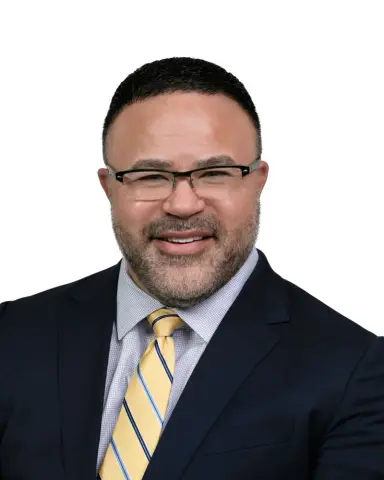
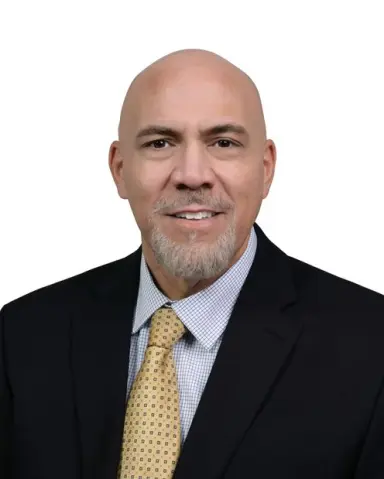
Jacob Buller: The Serial TCPA Litigator Who Challenged Bernie Sanders; Then Faced Criminal Charges
Jacob Buller, a Minnesota resident and professional UX designer, became one of the most recognized names in political TCPA litigation after filing a lawsuit against the Bernie Sanders presidential campaign over allegedly unsolicited automated text messages. Alongside co-plaintiff Cody Olson, Buller alleged that Bernie 2020 Inc. deployed automated texting technology to contact him without obtaining legally required prior express written consent in violation of the Telephone Consumer Protection Act.
Unlike ordinary consumers who file an isolated TCPA complaint following a single unwanted message, Buller cultivated a broader litigation portfolio concentrated on political campaigns, automated messaging platforms, large-scale texting operations, and organizations employing mass communication technology. Court records and legal commentary consistently characterize Buller as a serial TCPA litigator whose lawsuits target modern political messaging infrastructure and campaign outreach systems.
His litigation achieved national significance by directly challenging the widespread assumption that political campaigns could insulate themselves from TCPA liability by labeling their messaging platforms as volunteer-driven. Buller argued that peer-to-peer texting systems could still qualify as regulated automated communications when volunteers were merely activating centralized software platforms distributing prewritten scripts at scale.
Buller’s public profile underwent a dramatic transformation in late 2025 following his arrest in Ontario, Canada on criminal charges encompassing impaired driving, dangerous vehicle operation, and fentanyl possession allegations. Those charges are now being actively cited by defense attorneys and legal commentators as grounds for questioning his credibility and fitness to serve as a class representative in ongoing consumer protection litigation.
The result is a deeply complicated and contested public record: a technically sophisticated serial TCPA litigator whose criminal allegations have introduced significant scrutiny regarding his continued participation in class action proceedings.
Jacob Buller’s Multiple Public Identities
Jacob Buller’s public profile spans three distinct areas: TCPA litigation activity, professional work in the technology design sector, and criminal allegations arising from his 2025 arrest.
He is most widely recognized as a serial TCPA plaintiff whose lawsuits targeted political campaign texting systems. Simultaneously, Buller maintained a professional career as a UX designer and product strategist serving major technology-oriented organizations. His 2025 arrest in Ontario subsequently introduced a third dimension to his public profile that has significantly altered how legal commentators and defense practitioners discuss his ongoing litigation role.
This article focuses primarily on Buller’s documented TCPA litigation history while addressing the criminal allegations that have become materially relevant to continuing discussions about his adequacy and credibility as a proposed class representative.
Who Is Jacob Buller?
Jacob Buller is a Minnesota-based serial TCPA litigant associated with lawsuits involving political campaign messaging systems, automated text communications, and consumer privacy claims arising from unsolicited political outreach.
Court filings and publicly available materials indicate that Buller worked professionally as a lead UX designer and product strategist with documented experience across major consumer-facing and technology-focused organizations. Sources discussing his professional background reference work connected to organizations including Facebook, Google, UberEats, and the United States Patent and Trademark Office.
His technical background is directly relevant to understanding his litigation approach. Buller’s professional familiarity with communication system architecture, digital interface workflows, and large-scale messaging platforms appears to have informed his strategic focus on automated texting operations and peer-to-peer campaign systems.
Litigation records establish that Buller’s lawsuits commonly address unsolicited text messaging campaigns, ATDS statutory allegations, political outreach communications, recycled-number liability theories, and rapid-fire texting cadence patterns allegedly indicative of automated rather than individual human messaging.
The Landmark Bernie 2020 Lawsuit
Jacob Buller gained national recognition in TCPA litigation following his June 2020 filing against Bernie 2020 Inc. in the United States District Court for the District of Minnesota.
The case alleged that the Bernie Sanders presidential campaign transmitted unsolicited political text messages using automated technology without securing prior express written consent from the recipients.
According to the complaint, Buller received campaign text messages promoting Senator Sanders’ candidacy from phone numbers allegedly associated with the campaign’s texting network. The messages were described as standardized political outreach communications relying on prewritten template language.
Buller and co-plaintiff Cody Olson argued that the campaign deployed an Automatic Telephone Dialing System in violation of the TCPA. Both plaintiffs additionally alleged they had never authorized receipt of those communications.
The lawsuit rapidly attracted national attention as political campaigns across party lines were simultaneously increasing their reliance on mass-texting operations during the 2020 election season. Campaign consultants, advocacy organizations, and political messaging vendors all monitored the proceedings closely to determine whether courts would classify campaign texting infrastructure as regulated automated communications under federal law.
The Core Legal Arguments
Buller’s lawsuit advanced several legal theories that subsequently became foundational to broader political texting TCPA litigation.
One central argument was that political campaigns are not automatically exempt from TCPA compliance obligations simply because the communications pertain to elections or political advocacy rather than commercial advertising.
The complaint also directly challenged peer-to-peer texting systems that campaigns routinely described as human-initiated communications. Buller argued that volunteers activating buttons within centralized software systems did not eliminate the fundamentally automated character of the underlying communication architecture.
Another important argument involved heavily scripted messaging templates. Buller’s legal theory held that centrally coordinated and standardized text campaigns could trigger TCPA liability even when individual volunteers participated in the physical transmission process.
The lawsuit additionally raised technical issues surrounding originating phone numbers that allegedly generated errors, disconnected signals, or invalid responses when recipients attempted to return calls.
These arguments contributed meaningfully to a growing national debate about whether and how political texting technology should be regulated under the TCPA.
Strategic Venue Selection
The plaintiffs deliberately filed their lawsuit in the District of Minnesota based on the district’s track record of issuing rulings favorable toward broader interpretations of ATDS liability under the TCPA.
Prior political texting litigation involving the Donald Trump campaign had already generated important precedent within the district regarding automated communication systems and campaign outreach operations.
Defense-oriented legal commentators quickly identified the developing pattern: major presidential campaigns were emerging as significant TCPA litigation targets during the 2020 election cycle.
Buller’s lawsuit therefore became part of a broader and strategically significant legal trend involving election-related TCPA litigation targeting political organizations across the ideological spectrum.
Expanding Litigation Themes
As Buller’s litigation activity developed further, several recurring legal theories became increasingly prominent.
A major area of focus involved recycled-number liability. Buller argued that organizations retain TCPA exposure when messages are transmitted to reassigned phone numbers even when a prior owner of that number had originally consented to communications.
This theory created substantial compliance risk for campaigns and messaging vendors because mobile phone numbers change ownership with considerable frequency, and consent records tied to prior owners provide no protection against claims by new subscribers.
Buller’s litigation also concentrated on what commentators described as “staccato texting”, rapid-fire message sequences suggesting automated behavior rather than genuine individualized one-to-one human communications.
In related proceedings involving political vendors and outreach systems, Buller-associated litigation additionally challenged the deployment of prerecorded soundboard snippets, arguing that such technology could qualify as regulated prerecorded voice communications under the TCPA.
Cumulatively, these legal theories intensified pressure on campaigns, consulting firms, and messaging platforms to implement more rigorous compliance programs.
The Ontario Arrest and Criminal Charges
Jacob Buller’s public profile changed fundamentally in November 2025 after his arrest in Sault Ste. Marie, Ontario.
According to public police reporting, officers allegedly encountered Buller asleep at the wheel of an idling motor vehicle during the early morning hours. Authorities documented observations involving a cellphone and alleged traffic violations.
Police subsequently announced multiple criminal and provincial charges against Buller.
The charges reportedly included operation of a motor vehicle while impaired, dangerous operation of a motor vehicle, possession of fentanyl, handheld-device violations, seatbelt violations, and driving-related licensing allegations.
Authorities reportedly recovered suspected fentanyl and associated paraphernalia during their investigation.
Police reporting indicated that breath samples showed no alcohol presence but that officers alleged impairment by drugs following a Drug Recognition Evaluation.
Buller was subsequently released on an appearance notice pending judicial proceedings.
It is critically important to emphasize that all criminal charges constitute allegations and do not represent findings of guilt unless established through appropriate court proceedings.
Impact on Buller’s Litigation Credibility
The criminal allegations significantly altered the public and legal conversation surrounding Buller’s continued role as a TCPA class representative.
Defense attorneys and legal commentators increasingly began referencing the arrest in connection with adequacy challenges and credibility disputes in pending consumer class action proceedings.
Substantive questions emerged about whether criminal allegations involving impaired vehicle operation and fentanyl possession could materially undermine Buller’s suitability to represent absent class members in ongoing federal litigation.
This issue assumed particular significance given that class representatives are expected to demonstrate credibility, reliability, and a demonstrated commitment to protecting the interests of the entire class rather than their individual interests alone.
Although the charges remain unresolved allegations, the arrest introduced substantial reputational vulnerability that defense counsel are expected to continue exploiting strategically in all proceedings where Buller participates as a proposed class representative.
The UX Design Connection
Beyond his litigation activity, Buller’s professional background in UX design and product strategy remains a significant and distinctive element of his broader public profile.
His documented professional work reportedly involved analyzing user interaction patterns, digital workflow architectures, and communication systems for major organizations operating in the technology sector.
This technical professional background is frequently cited as an explanation for the unusually sophisticated quality of Buller’s litigation strategy. His detailed attention to messaging platform architecture, communication cadence patterns, software workflow mechanics, and system behavioral indicators distinguishes his complaints from those filed by many other TCPA plaintiffs.
That combination of technical industry expertise and sustained litigation activity established Buller as a notably sophisticated and distinctive figure among serial TCPA plaintiffs.
How Buller Differs From Other Serial Litigators
Although widely characterized as a serial TCPA litigator, Buller’s profile carries important distinctions relative to certain other high-profile plaintiffs in the TCPA space.
No publicly documented allegations suggest that Buller employed fabricated identities, manufactured claims, or engaged in the deceptive conduct commonly associated with extreme professional plaintiffs operating in the TCPA ecosystem.
The primary controversy surrounding Buller derives from his criminal allegations and the consequent credibility concerns they have generated, rather than from any fraudulent or deceptive litigation behavior.
His technical professional background, combined with his specialized litigation focus on political messaging systems, produced a profile considerably more sophisticated and specialized than that of the typical TCPA robocall plaintiff.
What Buller’s Litigation Means for Political Campaigns
Buller’s lawsuits have materially influenced how political campaigns assess and manage texting compliance risks.
One fundamental lesson has been that political campaigns cannot treat their messaging operations as automatically immune from TCPA restrictions simply because the content involves elections or political advocacy.
Another key lesson involved peer-to-peer texting architecture. Campaigns learned that human volunteer participation alone may be insufficient to protect against TCPA liability when the broader messaging infrastructure operates with substantial automation.
Buller’s litigation additionally heightened awareness of recycled-number liability and encouraged broader adoption of Reassigned Numbers Database scrubbing across the campaign technology sector.
Campaigns and their technology vendors became increasingly cautious regarding soundboard technology deployment, texting cadence patterns that might suggest automation, and data-enrichment practices applied to voter files.
The collective effect was substantially heightened scrutiny of political messaging technology throughout the election industry and broader adoption of more rigorous TCPA compliance protocols.
Frequently Asked Questions
Is Jacob Buller a serial litigator?
Yes. Public court records identify Jacob Buller as a repeat TCPA plaintiff with documented involvement in litigation targeting political campaigns and automated texting systems.
What is Jacob Buller best known for?
He is primarily known for filing suit against the Bernie Sanders presidential campaign over alleged unsolicited automated political text messages.
What is Buller’s professional background?
Buller has worked professionally as a UX designer and product strategist with documented experience involving major technology-sector and consumer-facing organizations.
Was Jacob Buller arrested?
Yes. Public police records indicate Buller was arrested in Ontario in November 2025 on criminal and provincial charges involving impaired vehicle operation and fentanyl-related allegations.
How are the criminal charges affecting his litigation?
Defense attorneys are citing the criminal allegations to challenge Buller’s credibility and adequacy as a proposed class representative in ongoing consumer protection proceedings.
What is recycled-number liability?
The theory holds that organizations may face TCPA exposure when they transmit messages to reassigned phone numbers whose current owners never consented to receive those communications.
What is “staccato texting”?
The term describes rapid-fire sequential text message patterns that may suggest automated communication behavior rather than genuine one-to-one individualized human outreach.
Final Thoughts: The Serial Litigator Now Facing Credibility Challenges
Jacob Buller became one of the most visible figures in modern political TCPA litigation by systematically challenging campaign texting systems, peer-to-peer messaging architecture, and automated political outreach infrastructure.
His lawsuit against Bernie 2020 played a meaningful role in shaping the national debate over political text-message compliance and campaign automation boundaries. His litigation theories contributed to lasting scrutiny of recycled-number liability, texting cadence indicators, and peer-to-peer outreach technology compliance standards.
At the same time, Buller’s November 2025 arrest fundamentally altered the public narrative surrounding his ongoing role as a litigant.
Prior to the arrest, Buller was primarily discussed as a technically sophisticated serial TCPA litigator with a specialized focus on political messaging compliance. Following the arrest, criminal allegations became a central element of every public discussion concerning his credibility and continued adequacy as a proposed class representative.
Unlike some professional plaintiffs whose controversies stem from deceptive litigation practices or fabricated identities, Buller’s controversy originates from criminal allegations arising outside the litigation context.
Nevertheless, those allegations have created substantial and ongoing vulnerabilities for a litigant whose strategic effectiveness depends heavily on maintaining standing, credibility, and the ability to satisfy class representation adequacy standards.
The serial TCPA litigator who once challenged presidential campaigns now faces significant challenges to his own standing in federal court.
Sources & References
Primary Sources — Jacob Buller Litigation
https://www.classaction.org/media/buller-et-al-v-bernie-2020-inc.pdf
https://www.law360.com/articles/1283117/sanders-presidential-campaign-hit-with-suit-over-auto-texts
Buller et al. v. Bernie 2020 Inc., Case No. 0:20-cv-01368 (D. Minn.)
Primary Sources — Criminal Charges
Sault Ste. Marie Police Service public release regarding November 21, 2025 arrest
https://www.instagram.com/p/DSjyjSiDuac/
Secondary Sources
https://www.linkedin.com/in/jacob-buller/
Pederson v. Donald J. Trump For President, Inc., No. 19-2732 (D. Minn.)
Buller v. Grassroots Targeting litigation references
Disclaimer
This article is based on publicly available court filings, legal commentary, judicial rulings, media reporting, and police records. References to Jacob Buller as a serial TCPA litigator or professional plaintiff are derived from documented litigation activity involving political campaign texting disputes and related TCPA claims. The criminal allegations discussed herein are based on public police reporting and remain allegations unless established in court. This article is provided solely for informational, educational, and commentary purposes and does not constitute legal advice.