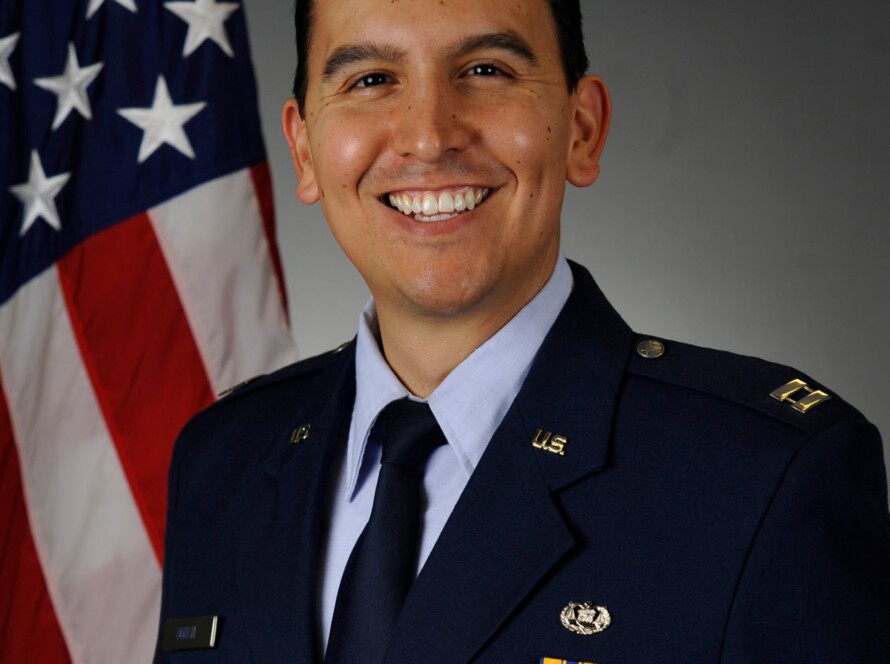
James Sheldon: The Serial TCPA Litigant Caught on Recording Saying “Pillaging Them, That’s the Point”
James Everett Sheldon has become one of the most polarizing and widely discussed figures in Telephone Consumer Protection Act litigation. Unlike many serial TCPA plaintiffs who pursue dozens of lawsuits through quiet technical filings and behind-the-scenes settlement discussions, Sheldon achieved national prominence after audio recordings captured him openly and explicitly describing his litigation strategy in terms that shocked the legal industry.
In those recordings, Sheldon repeatedly declared:
“Pillaging them, that’s the point. We’re absolutely pillaging them.”
Those words transformed Sheldon from a routine serial plaintiff into a widely recognized symbol of alleged professional plaintiff abuse. Defense attorneys, corporate legal departments, and legal reform organizations now routinely invoke Sheldon as a central example of how statutory damages under the TCPA can allegedly be exploited as a profit-generating mechanism.
Court records, bankruptcy filings, public records, and legal commentary collectively indicate that Sheldon has initiated more than 50 TCPA lawsuits since 2016. His litigation history encompasses agreed judgments, default judgments, venue transfer disputes, strategic bankruptcy protection maneuvers, and allegations that he coached other individuals to pursue parallel claims.
Today, Sheldon remains one of the most widely recognized serial TCPA litigants operating in the United States.
Who Is James Everett Sheldon?
James Everett Sheldon is an 88-year-old resident of New Holland, Pennsylvania. Public records identify him as a longtime Pennsylvania resident with a limited digital presence and no significant public-facing business operations beyond his sustained litigation activity.
Public records place Sheldon at 430 W Main St Apt 4, New Holland, Pennsylvania 17557. He is associated with the phone number 717-355-0265 and a debt collection-related enterprise known as Final Verdict Solutions.
Unlike other prominent serial TCPA plaintiffs who possess substantial real estate holdings or operate visible online businesses, Sheldon appears to live modestly. Public records reportedly reflect no property ownership, no identified vehicles, and no meaningful commercial footprint outside litigation activity.
Critics argue that Sheldon’s own recorded statements powerfully suggest that his primary motivation is financial extraction through repeated statutory damage claims rather than any genuine consumer advocacy mission.
The Recorded “Pillaging” Statements
The most consequential evidence shaping Sheldon’s public reputation derives from audio recordings obtained by legal reform advocates and defense organizations.
According to those recordings, Sheldon openly discussed identifying and targeting companies for TCPA litigation and maximizing statutory penalties.
Statements attributed to Sheldon reportedly included:
• “Pillaging them, that’s the point.”
• “We’re absolutely pillaging them.”
• Discussions of suing defendants for $1,500 per call
• Conversations about encouraging others to initiate similar lawsuits
• Alleged explanations of methods for generating litigation claims
Defense attorneys frequently introduce these recordings because they directly implicate one of the central legal questions in TCPA litigation: standing and genuine injury.
Under federal law, plaintiffs are generally required to demonstrate actual injury or concrete harm. Critics argue that a plaintiff who allegedly invites telemarketing contact for the purpose of generating lawsuits may face serious credibility challenges when asserting genuine injury.
The recordings became central weapons in multiple campaigns attacking Sheldon’s credibility across federal proceedings.
The Emergence of a High-Volume TCPA Plaintiff
Court records document that Sheldon has initiated more than 50 TCPA-related lawsuits since 2016.
His cases generally involve:
• National Do Not Call Registry allegations
• Automated dialing system claims
• Robocall violations
• Telemarketing consent disputes
• Internal Do Not Call procedure failures
Many defendants reportedly chose settlement over litigation costs, while other cases produced default judgments or extended procedural disputes.
Defense firms increasingly characterize Sheldon as a professional plaintiff operating a litigation business rather than a conventional consumer seeking redress.
Bankruptcy Filings and Litigation Tactics
One of the most debated aspects of Sheldon’s litigation history involves his use of bankruptcy proceedings.
Defense attorneys and legal commentators have argued that Sheldon exploited bankruptcy filings strategically to insulate himself from liability and interrupt counterclaims filed by defendants.
According to critics, the alleged strategy operated as follows:
• TCPA lawsuits were filed against defendants seeking statutory damages
• Defendants responded with counterclaims challenging his conduct
• Bankruptcy petitions were filed
• Automatic bankruptcy stays temporarily halted counterclaim proceedings
• Settlement pressure shifted back toward defendants
Critics contend that this approach allowed Sheldon to maintain forward momentum in his own filings while limiting financial exposure from defendants attempting to countersue him.
The tactic also raised questions regarding whether Sheldon could adequately represent proposed nationwide classes while operating under the constraints of active bankruptcy protection.
Final Verdict Solutions and the Business Line Problem
Another persistent issue across Sheldon’s cases involves his debt collection-related business, Final Verdict Solutions.
Defendants repeatedly argue that the phone numbers Sheldon uses in his litigation activities are business lines rather than personal residential numbers.
That distinction carries legal weight because the National Do Not Call Registry is generally designed to protect personal residential numbers, not business lines operated for commercial purposes.
Sheldon apparently maintains that those numbers are personal and entitled to TCPA protection, while defendants argue the lines are functionally connected to his debt collection operations and commercial activity.
If courts conclude that a number primarily functions as a business line, applicable TCPA protections may not extend to it.
This dispute has become a focal point in multiple Sheldon proceedings.
Shelton v. Freedom Forever LLC
One of Sheldon’s most prominent recent cases involved Freedom Forever LLC.
The proceeding was initially filed in Pennsylvania before being transferred to the Central District of California.
The venue transfer was broadly viewed as a setback for Sheldon because it eliminated his home-court advantage and relocated the litigation into a more defense-favorable jurisdiction governed by Ninth Circuit precedent.
Despite the transfer, Sheldon survived a motion to dismiss in October 2025.
Judge Otis D. Wright II ruled that Sheldon had adequately alleged continuing harm by documenting communications received after filing suit.
That ruling became significant because Sheldon’s practice of documenting post-filing contacts is a recurring strategic feature of his litigation approach.
The “Post-Filing Call” Strategy
One defining feature of Sheldon’s litigation methodology is his careful attention to communications received after lawsuits have already been filed.
Post-filing calls can potentially:
• Demonstrate ongoing injury and harm
• Reinforce standing arguments
• Highlight broken or inadequate Do Not Call compliance systems
• Support injunctive relief requests
• Strengthen allegations of willful or knowing violations
Defense attorneys characterize this approach as calculated evidence accumulation. Sheldon and his defenders characterize it as evidence that companies systematically fail to honor legitimate opt-out requests.
RICO Counterclaims Against Sheldon
Several defendants escalated disputes by asserting RICO claims directly against Sheldon and associated parties.
Those allegations characterized his repeated TCPA filings as a coordinated litigation enterprise involving:
• Patterned litigation activity across multiple jurisdictions
• Organized settlement extraction
• Systematic exploitation of statutory damages
• Coordinated filing strategies involving other plaintiffs
Federal courts ultimately dismissed those RICO claims.
Judges concluded that filing lawsuits repeatedly, even aggressively and at high volume, does not automatically constitute criminal racketeering activity.
Although the RICO claims failed as a matter of law, the allegations further eroded Sheldon’s reputation among defense organizations and corporate legal counsel.
The Craig Cunningham Connection
Recorded conversations involving Sheldon also referenced another well-known TCPA litigant: Craig Cunningham.
According to commentary surrounding the recordings, Sheldon allegedly engaged in discussions with Cunningham regarding shared litigation strategies and apparently encouraged similar filing activity.
The reported discussions allegedly included:
• Identifying potential lawsuit targets
• Exchanging litigation strategy information
• Explaining statutory damage calculation theories
• Discussing filing approaches and procedural considerations
Critics argue that these conversations suggest organized, coordinated serial litigation activity rather than isolated consumer disputes arising independently.
Public Records and Lifestyle
Public records paint a notably different portrait of Sheldon compared to certain other prominent serial litigants.
Unlike plaintiffs associated with luxury assets or substantial property holdings, Sheldon appears to maintain a comparatively modest lifestyle.
Public records reportedly reflect:
• Residence in an apartment in New Holland, Pennsylvania
• No identified real estate ownership
• No vehicles located through public records searches
• Minimal or nonexistent social media activity
• An extremely limited online footprint
• Association with Final Verdict Solutions
Despite the modest public profile, his litigation activity remains both extensive and legally significant.
Active and Recent Cases
Recent proceedings associated with Sheldon include:
• Shelton v. Freedom Forever LLC
• Shelton v. Pure Energy USA
• Shelton v. Fastenere Inc.
These cases continue attracting substantial defense industry attention because firms increasingly leverage Sheldon’s recorded statements and litigation history as standing challenges and credibility attacks.
Why Defense Firms Target Sheldon Aggressively
Defense attorneys frequently argue that Sheldon represents one of the clearest and most documented examples of alleged professional plaintiff abuse under the TCPA.
Major defense arguments include:
• Profit-driven litigation supported by explicit audio recordings
• Phone numbers allegedly connected to business operations through Final Verdict Solutions
• Strategic bankruptcy filings designed to limit liability exposure
• Alleged coaching and coordination of other serial litigants
• Lawsuit volume exceeding 50 filed cases since 2016
The recordings themselves make Sheldon unusually vulnerable among serial litigants because very few plaintiffs in TCPA history have so openly and explicitly discussed their litigation strategy in terms that can be used against them.
Telemarketing Compliance Lessons
Even Sheldon’s critics acknowledge that his lawsuits illuminate critical compliance vulnerabilities for businesses operating automated communication systems.
Key compliance lessons include:
• Honor opt-out requests immediately upon receipt
• Maintain strong and auditable internal Do Not Call procedures
• Monitor third-party marketing vendors carefully and continuously
• Track all communications received after litigation commences
• Verify whether numbers are residential or business lines before contacting
• Preserve complete consent documentation and suppression records
Businesses operating with weak compliance infrastructure remain exposed to TCPA litigation risk regardless of the plaintiff involved.
Frequently Asked Questions
Is James Sheldon a serial TCPA litigant?
Yes. Court records document that Sheldon has filed more than 50 TCPA lawsuits since 2016.
What did Sheldon say on the recording?
He was reportedly recorded stating: “Pillaging them, that’s the point. We’re absolutely pillaging them.”
What is Final Verdict Solutions?
Final Verdict Solutions is a debt collection-related business publicly associated with Sheldon.
Why does the business-line issue matter?
The National Do Not Call Registry generally does not extend protection to business phone lines. Defendants argue that Sheldon’s numbers are linked to commercial operations, not personal residential use.
Did Sheldon file for bankruptcy?
Yes. Court records confirm that Sheldon filed for bankruptcy protection while actively pursuing TCPA litigation.
What happened in Shelton v. Freedom Forever?
The case was transferred from Pennsylvania to California, but Sheldon survived a motion to dismiss in October 2025.
How many TCPA lawsuits has Sheldon filed?
More than 50 lawsuits since 2016, based on available court records.
Final Thoughts
James Everett Sheldon has become one of the most widely recognized serial TCPA litigants in the country.
His litigation record encompasses more than 50 lawsuits, bankruptcy protection filings, venue transfer battles, default judgments, and persistent allegations of coordinated litigation activity. But the defining feature of his public identity remains the recorded audio in which he openly and vividly described “pillaging” companies through TCPA lawsuits.
Those recordings permanently altered how defense attorneys, federal courts, and legal commentators perceive and evaluate Sheldon’s litigation activity.
To critics, Sheldon embodies everything allegedly wrong with statutory damage exploitation under the TCPA:
• High-volume filing campaigns
• Profit-driven litigation strategy
• Technical statutory claims designed to maximize per-call damages
• Bankruptcy protection deployed as a litigation tool
• Disputed business-line designations
• Settlement pressure campaigns
Supporters of robust TCPA enforcement argue that companies violating telemarketing laws deserve legal accountability regardless of who brings the lawsuits.
Still, few plaintiffs in modern TCPA history have generated controversy at the scale of James Everett Sheldon.
And few have left behind recorded statements that became such powerful and enduring evidence against their own litigation activities.
“Pillaging them, that’s the point. We’re absolutely pillaging them.”
Sources & References
Primary Sources
Institute for Legal Reform report regarding recorded conversations
Shelton v. Freedom Forever LLC, 2:25-cv-01970 (C.D. California)
Shelton v. Pure Energy USA, 2:25-cv-03590
Related federal court docket filings
Secondary Legal Commentary
National Law Review analysis of venue transfer proceedings
Federal docket records and procedural rulings
TCPA litigation commentary and defense analysis
Public Records Sources
BeenVerified public records summary
Pennsylvania address history databases
Court filing disclosures
Bankruptcy filings and litigation records
Disclaimer
This article is based on publicly available court filings, legal commentary, media reporting, recorded statements, public records databases, and judicial proceedings. Allegations described herein may not have been proven in court unless specifically stated. Public records information may not always be current or fully accurate. This article is provided for informational and educational purposes only and does not constitute legal advice.